GLOBAL EDUCATION IS PART OF SCHOOLS’ INTERNATIONAL ACTIVITIES IN FINLAND, BUT HOW AND HOW MUCH?

Author: Paula Mattila, PhD researcher, University of Jyväskylä, CALS

paula.k.mattila@student.jyu.fi

As a doctoral researcher at the University of Jyväskylä Centre for Applied Linguistics, I currently focus on the internationalisation / internationality of Finnish basic and upper secondary general education. Based on my research and experience, I am writing this blog post to contend that schools’ internationalisation is closely related to global education, and the two phenomena are quite entangled in schools’ realities. Hence, I wish to draw global education researchers’ attention to a related research gap which I will be outlining below.

A significant portion of my working life has revolved around the internationalisation of education, first at an emerging university of applied sciences (UAS) in the Helsinki region, and later, at the Finnish National Agency for Education (FNBE). This meant that I first came to examine internationalisation from the angle of higher education, and later through the lens of basic and secondary education. In both positions, I wanted to develop and better understand internationalisation as a multi-faceted tool in educational development. Perhaps more importantly, I tried to lure teachers and education leaders to take on such practical and intellectual efforts. I even wrote my licentiate thesis about the conceptualisation of internationalisation at my UAS (Mattila, 2006). Now a retiree, I delve into the internationalisation of school level and K-12 education.

In my PhD work, my overarching research question is: what is school level internationalisation all about? What definitions can be found in the Finnish context, more specifically in the respective core curricula? I utilize qualitative data analysis with epistemic governance (Alasuutari & Qadir, 2014) and methodological nationalism (Shahjahan & Kezar, 2013) as my key theoretical tools. I also draw insights from my decades long autoethnographic data. With epistemic governance theory I can unveil how several elements in schools’ internationalisation, while they have been accepted as facts or business-as-usual by many, have been born out of strategic and tactical turns, even rivalries, between actors who can wield epistemic, i.e. knowledge related power. Theory on methodological nationalism informs me of how definitions of nationality and cultural traits based on national borders are problematic, in so much as they exclude critical approaches and knowledges. An autoethnographic lens in turn provides me with detailed information about spaces (and struggles) where schools’ internationalisation has been in the making.

Next, I’d like to call your attention to an observation I’ve made through my career, namely, that there are several commonalities in internationalisation at all levels of education. Technically, internationalisation in all education encompasses remotely look-alike approaches and activities, including teaching international subject content, organizing international mobility of students and staff, running collaboration projects with foreign schools or other entities, and providing for the large variety of functions that pertain to IaH, internationalisation at home. IaH offers ways in which students can engage in international issues and develop related competences without leaving their local contexts (Opetushallitus, 2019; Tamtik & James, 2025).

Content-wise, a key observation stemming from my licentiate study, and further corroborated in my work with schools, is that those in charge of developing education internationalisation aim to enhance students’ global competences. That is, education at all levels has converged in attempts to provide students with such competences as will help them “not only to expand intellectual horizons but also to nurture a collective sense of responsibility toward humanity and the planet” (Bosio & de Wit, 2024, 9). In the 1990s such endeavours were called international education and later, global education (for the conceptual transformation, see e.g. Jääskeläinen, 2016).

Research is where commonalities seem to dwindle. While the internationalisation of higher education is the perennial object and source of copious research, school-level internationalisation is under-researched and largely untheorized (Bosio & de Wit, 2024; Medvedeva, 2018). It has even been postulated that schools’ internationalisation lacks the kind of intellectual attention that it has garnered in higher education (Waters & Brooks, 2024). Globally (sic), the situation is changing as more, and more diverse research is devoted to K-12 internationalisation (Tamtik & James, 2025). Keeping a watchful eye on what is studied in this arena, I know there is this still much space for research in Finland.

While global education is increasingly understood and practiced as a cornerstone of higher education internationalisation (e.g., Bosio & de Wit, 2024; Leask, 2015), it is also part of its research agenda. There is also a growing body of research concerning school education, encompassing such themes as education for sustainable development, multiculturalism, interculturality, etc., which all come close to how global education is defined. A tiny selection of research from Finland could comprise; Hahl, 2020 (interculturality, languages); Henriksson, 2022 (organisations and global education); Riitaoja, 2013 (multiculturality, othering); Rokka, 2011 (political dimension in internationalisation); Saloranta, 2017 (sustainability education). Their research investigates, among other data, Finnish core curricula, which is meaningful because the core curricula are norms in their respective educations. These researchers don’t, however, address schools’ international activities thus omitting a wealth of material. Namely, schools regularly claim that their international activities are ways to carry out what has been encoded in the curricula as global education, or intercultural and language education (autoethnographic data).

The core curricula comprise a key portion of my research data as well; I endeavour to find out what the high school curricula stipulate about internationalisation. I recently wrote with colleagues about transversal competences aka cross-curricular skills in high school curricula. We concluded that elements of global education have been an enduring part of these documents’ depictions of transversal competence (Mattila et al., 2025; also, Mattila, 2025).

Outside curricula, where there is literature on schools’ internationalisation (including reports, guidebooks, internet portals), the emphasis is mostly on solutions and outcomes that may support schools and their providers of education to further develop these activities (cf. Tamtik & James, 2025). My specific interest resides in what has been written as guidelines and reports concerning state level financing for schools’ internationalisation.

Unlike in higher education, the literature is scarce on the ontologies and epistemologies of schools’ internationalisation. Elsewhere I’ve written about some attempts to definitions authored between CIMO and the FNBE in 2008 – 2014 (Mattila, 2025). But basically, not much attention has been paid to what could be understood as schools’ internationalisation and why, or how the knowledges related to internationalisation are shaped, by whom, and why. This is where I’ve found Shahjahan and Kezar’s (2013) insights about methodological nationalism invaluable and will write about my findings in my next article-in-spe.

In Europe, with Finland as a strong case in point, education internationalisation is largely channelled via the EU Erasmus+ Progamme (Tamtik & James, 2025). A specific agency (“CIMO”, 2025) was established in Finland in 1991 under the Ministry of Education and Culture to govern and implement the growing number of predominantly EU-financed educational programs for all education sectors. Today, under a specific administrative structure at the FNBE, there are units responsible for the implementation of the EU and other international educational programs including programs associated with K-12 education.

An overview of what schools in Finland consider or wish to represent as their international activities is provided by the statistics that are collected by the FNBE annually. The data collection originated in 2009 with CIMO as a sideline of its reporting functions to the EU. The aim was and is to gather broad-based information on schools’ international activities (Mattila, 2025). However, over the years, the survey’s focus has been on transnational mobility and projects – see the headline emphasizing mobility in the 2024 survey report (Opetushallitus, n.d.-a). Employing epistemic governance theory I’d like to make a point here about statistics: they can be used to persuade actors to see certain entities (data, knowledge) as more valuable than others. If a survey to collect data on a variety of activities is titled with the name of one activity only, the surveyor obviously wants to invite the informants to set their focus on the named activity (Alasuutari & Qadir, 2014; Mattila, 2025).

To the reader I suggest a closer look at a recent survey report by the FNBE (Opetushallitus, n.d.-b.). It discloses that global education accounts for a significant proportion of schools’ international activities.  Moreover, schools often claim that their foreign mobility activities primarily function as students’ and teachers’ first-hand experiences about global education. What this global education encompasses, is not explained in the survey report while its focus is on mobility.

On a different note, and somewhat contradictory as regards the concept of global education, is how the survey also illustrates the nearly exclusively Europe-orientated distribution of schools’ internationality (Opetushallitus, n.d.-c). I hope this might also be of interest to researchers of global education.

So, I’m coming back to my wish to make GERIF colleagues interested in schools’ internationalisation. Despite the lively research on global education in school education, so richly attested in ANGEL’s Digests and Conferences, I find that it is not illuminated by looking into the diverse actions schools dub as their international activities. Yes, I have been actively browsing the Digests to find out. I also carefully looked at the Berlin 2025 Conference abstracts and could not spot a presentation about this topic.

Do contact me at paula.k.mattila@student.jyu.fi in case anything in this blog post made you wish to ask for clarifications, to make a comment or even suggest collaboration.

References

Alasuutari, P. & Qadir, A. (2014.) Epistemic governance: an approach to the politics of policy-making. European Journal of Cultural and Political Sociology, 67-84. https//:doi.org/10.1080/23254823.2014.887986

Bosio, E. & de Wit, H. (2024). Fostering service to society, inclusion, and equity through Global Citizenship Education: A conversation with Hans de Wit. Prospects. https://doi.org/10.1007/s11125-024-09695-8

CIMO. (2025, August 28). In Wikipedia. https://fi.wikipedia.org/wiki/CIMO

Hahl, K. (2020). Kulttuurin muuttunut olemus opetussuunnitelmissa ja vieraiden kielten oppikirjoissa. In Hildén, R. & Hahl, K. (Eds.) Kielididaktiikan katse tulevaisuuteen: Haasteita, mahdollisuuksia ja uusia avauksia kielten opetukseen. Ainedidaktisia tutkimuksia: 17. (pp. 173-202). http://hdl.handle.net/10138/312321

Henriksson, H. (2022). Educating global citizens: a study of interaction between NGOs and schools in Finland. (Doctoral dissertation). University Åbo Akademi. https://www.doria.fi/handle/10024/91680

Jääskeläinen, L. (2016). The curriculum reform of basic education gives strong mandate to global educators in Finland. Sinergias – diálogos educativos para a transformação social, Setembro 2015 – n.º 2, 2-20. https://sinergiased.org/wp-content/uploads/2021/10/revista_final2.pdf#page=12

Leask, B. (2015). Internationalizing the Curriculum. Routledge. https://doi.org/10.4324/9781315716954

Mattila, P. (2006). Under a bright Star. Conceptualisation of polytechnic internationalisation. (Licentiate Thesis). University of Tampere. http://tampub.uta.fi/bitstream/handle/10024/76433/lisuri00049.pdf?sequence=1&isAllowed=y

Mattila, P. (2025). How Has K-12 Internationalization Evolved in Finland? Mapping Intentions, Unveiling Epistemic Insecurities. In: Tamtik, M. & James, C., eds. International Education in the K-12 Sector: Topics, Trends and Tensions. Springer Publishing. https://link.springer.com/chapter/10.1007/978-3-031-89677-4_2

Mattila, P., Inha, K., & Hildén, R. (2025). Laaja-alaisen osaamisen kuvaukset lukion opetussuunnitelmien perusteissa: Jotain uutta, jotain vanhaa, jotain lainattua. Kasvatus & Aika, 19(1), 28–51. https://doi.org/10.33350/ka.142679

Medvedeva, A. (2018). University Internationalization and International Master’s Programs. (Doctoral dissertation) University of Helsinki. https://helda.helsinki.fi/bitstream/handle/10138/235249/Universi.pdf?sequence=1&isAllowed=y

Opetushallitus (EDUFI). (n.d.-a). International mobility of pupils and students as well as teachers and other staff. https://www.oph.fi/en/statistics/international-mobility-pupils-and-students-well-teachers-and-other-staff

Opetushallitus (EDUFI). (n.d.-b). Kansainvälisyyden muotoja English. https://www.oph.fi/sites/default/files/documents/Kansainv%C3%A4lisyyden%20muotoja%20English_0.pdf

Opetushallitus (EDUFI). (n.d.-c). The origin and destination of countries… https://www.oph.fi/sites/default/files/documents/Top10%20maat%20in%20English_0.pdf

Opetushallitus (EDUFI). (2019). Lukion opetussuunnitelman perusteet 2019. Helsinki: National Board of Education. https://www.oph.fi/sites/default/files/documents/lukion_opetussuunnitelman_perusteet_2019.pdf

Riitaoja, A. (2013). Toiseuksien rakentuminen koulussa: Tutkimus opetussuunnitelmista ja kahden helsinkiläisen alakoulun arjesta. (Doctoral dissertation). University of Helsinki. http://urn.fi/URN:ISBN:978-952-10-7876-7

Rokka, P. (2011). Peruskoulun ja perusopetuksen vuosien 1985, 1994 ja 2004 opetussuunnitelmien perusteet poliittisen opetussuunnitelman teksteinä. (Doctoral dissertation). University of Tampere. https://urn.fi/urn:isbn:978-951-44-8456-8

Saloranta, S. (2017). Koulun toimintakulttuurin merkitys kestävän kehityksen kasvatuksen toteuttamisessa perusopetuksen vuosiluokkien 1-6 kouluissa. (Doctoral dissertation). University of Helsinki. https://helda.helsinki.fi/items/0f0c1b15-4f41-4f9e-bed7-f2b59c28409f/full

Shahjahan, R. & Kezar, A. (2013). Beyond the ”National Container’‘: Addressing Methodological Nationalism in Higher Education Research. Educational Researcher: 42(20).  DOI: 10.3102/0013189X12463050

Tamtik, M. & James, C. (2025). Introduction. Introducing the Global Landscape of K–12 International Education. In: Tamtik, M. & James, C., eds. International Education in the K-12 Sector: Topics, Trends and Tensions. Springer Publishing.

Waters, J. & Brooks, (2024). The art of internationalisation: ‘unstrategic’ dialogical cosmopolitanism within secondary schools in England. Social and Cultural Geography. 10.1080/14649365.2022.2143880


Ignorance about Indigenous Peoples Through the Lens of Transnational Educational Research 

Author: Ella Mattila

In this blog post, I will discuss the phenomenon of a widespread ignorance about Indigenous peoples and colonial histories, especially from the perspective of education and educational research. The text is based on my doctoral research, in particular on its second sub-study article, which was published at the end of 2024. 

Indigenous issues have gained media attention in Finland in the past week, particularly following Sámi activist and writer Petra Laiti’s in-depth essay on the problematic use of the term “Lapland” to refer to the northernmost regions of the Nordic countries. Laiti critiques how the term, especially in English, carries stereotypical and “mythical” connotations amplified by the tourism industry, obscuring the realities and presence of the Sámi, the Indigenous people of the lands. The Sámi are spread across the borders of Finland, Sweden, Norway, and Russia, and their Indigenous status and rights are protected under the Finnish constitution. In both the original essay and follow-up posts, Laiti highlights how the discussions in and around her essay reflects widespread ignorance about Sámi matters: 

“[I]t’s my experience that hearing about Saami rights can be difficult for Nordic people to digest. I try my best to give my audience grace – most Nordic people don’t know enough about us Saami to fully understand. That is one major effect of the colonization my people face.” (petralaiti Instagram-post, 16.1.2025) 

This is not the first time the issue of ignorance about Sámi matters has been raised in Finland. The European Commission against Racism and Intolerance has given notice to Finland about the majority’s worrisome lack of knowledge in two successive reports. Sámi advocacy groups have repeatedly warned Finland about the consequences of such ignorance, noting its impact on Sámi livelihoods, self-determination, and the hate speech and racism the Sámi face in daily life.  

Ignorance about Sámi and other minority issues is a core concern in my ongoing doctoral research. Through my work, it has become emergingly clear that the issue is not uniquely Finnish. Across the globe, there is increasing recognition of similar ignorance concerning Indigenous peoples, prompting to ask: What kind of ignorance are we dealing with if it spans across continents? Moreover, as education systems play a central role in shaping societal knowledge, what can be done to address this ignorance, both in Finland and globally? 

Ignorance comes in many forms, some of which are a natural consequence of limited resources and capacity for learning – I, for example, know very little about different dog breeds or the UK parliament system, but the reasons for that don’t go much deeper than lack of time and specialization in the topics. Sullivan and Tuana (2007), however, note how some forms of ignorance may be tied to preserving privilege and the interests of the powerful. In Finland, as in many countries, the dynamics between Indigenous and non-Indigenous populations are shaped by settler colonialism – a unique form of colonialism where settlers “come to stay”, causing a process of erasure, displacement, and replacement of the original Indigenous inhabitants (see Wolfe, 2006). The history and forms of settler colonialism remain poorly understood in Finland, often dismissed with the argument that there has been “no colonial history” in Finland. 

In response to this context, my supervisors and I began to view ignorance about Indigenous peoples not as mere “lack of knowledge,” but as something tied to broader social forces. In spring 2024, we set up to review 51 articles and book chapters on “settler ignorance” from six settler-colonial contexts – Finland, Sweden, Norway, Canada, Australia, and New Zealand. We found it relevant to explore how such ignorance is conceptualized across national borders to increase understanding of the possible means to address it (also Cook, 2020). 

Our review revealed that settler ignorance operates on multiple levels. The lack of knowledge is often linked to how learning about Indigenous peoples is hindered by prevailing stereotypes and the emotional sensitivity of the topic. Difficult conversations about colonial violence and trauma can provoke feelings of anxiety, guilt, fear, and grief in learners, leading also to (semi-)willful avoidance or denial. However, the literature also highlighted the importance of understanding the phenomenon’s long entanglement with structural silencing and history that extends beyond individual interests: across contexts, people expressed surprise and shock at having never learned about Indigenous issues, often articulating the motivation to engage further with the subject. This receptivity seems promising for any future educational interventions. 

So, what could this mean for education and educational research? While increasing the presence of Indigenous content and teaching in different levels of education is a self-evident step, our review suggests that it is also one that should not be underestimated. Based on the review, we cannot expect most students to know basic facts about colonialism, for example, and the systemic silences around Indigenous matters make it uncertain whether students will be exposed to such knowledge outside of formal education. However, teaching “about” Indigenous peoples and their experiences is not enough on its own. Education should be led and informed by Indigenous peoples themselves to ensure that it is relevant and fosters authentic relationship-building. 

Furthermore, our findings highlight the need to address not only the cognitive but also the emotional and social dimensions of ignorance. Support for emotional struggles and self-reflection may be crucial for learners (un)learning their previous assumptions and confronting issues of colonial accountability. Education, therefore, requires a delicate balance: acknowledging the very real vulnerability surrounding the topics while simultaneously creating spaces to challenge deeply ingrained ignorance and address ongoing injustice, which may inevitably entail discomfort. 

Tackling ignorance about Indigenous peoples is not only about general awareness but also a matter of social justice, human rights, and anti-racism in education. We must be cautious about assuming that educational knowledge alone will be sufficient to overcome such a powerful colonial phenomenon. Educational initiatives are often contested by entrenched attitudes and assumptions that have become part of the majority’s “common sense” and national identity (Cook, 2020). Nonetheless, while education may not be the sole cause of settler ignorance, it plays a key role in its continuation (Godlewska et al., 2010; 2020). Therefore, education systems can and should be expected to engage with the Indigenous peoples and to present little tolerance for willful ignorance that harms Indigenous communities. As one of our reviewed articles aptly put it, “awareness alone can lead to the kinds of changes we are seeking, or at the very least offer a first step” (Augustus, 2015, p. 6). 

The full review paper can be found here:  

Mattila, E., Lindén, J., & Annala, J. (2024). Reviewing educational conceptualisations of transnational settler ignorance. Educational Review. https://doi.org/10.1080/00131911.2024.2437405  

Ella Mattila is a doctoral researcher at the Faculty of Education and Culture, Tampere University. Her research interests include Indigenous and minority education, critical whiteness studies, and anti-colonial and anti-racist teacher education. 

References: 

Augustus, C. (2015). Knowledge liaisons: Negotiating multiple pedagogies in global indigenous studies courses. Canadian Journal of Higher Education, 45(4), 1–17. https://doi.org/10.47678/cjhe.v45i4.184894 

Cook, A. (2018). Recognizing settler ignorance in the truth and reconciliation commission. Feminist Philosophy Quarterly, 4(4), 6. https://doi.org/10.5206/fpq/2018.4.6229  

Godlewska, A., Moore, J., & Bednasek, C. D. (2010). Cultivating ignorance of aboriginal realities. The Canadian Geographer, 54(4), 417–440. https://doi.org/10.1111/j.1541-0064.2009.00297.x  

Godlewska, A. M. C., Schaefli, L. M., Forcione, M., Lamb, C., Nelson, E., & Talan, B. (2020). Canadian colonialism, ignorance and education. A study of graduating students at Queen’s University. Journal of Pedagogy, 11(1), 147–176. https://doi.org/10.2478/jped-2020-0008 

Sullivan, S. & Tuana, N. (2007). Race and epistemologies of ignorance. Suny Press. 

Wolfe, P. (2006). Settler colonialism and the elimination of the native. Journal of Genocide Research, 8(4), 387–409. https://doi.org/10.1080/14623520601056240  


GERIF Network Members at the ‘Reimagining Teachers and Teacher Education for Our Futures’ Conference

Authors: Andreas Rogler, Vihtori Kylänpää, Tuija Kasa, Selja Koponen, and Riikka Suhonen

Between the 18th and 20th of June 2024, GERIF had the great opportunity to join the “The Reimagining Teachers and Teacher Education for Our Futures conference” in Helsinki.

https://www.helsinki.fi/en/conferences/reimagining-teachers-and-teacher-education-our-futures

The conference highlighted the crucial role of teachers in providing quality instruction and shaping the critical, transversal skills necessary for our futures. 

Education has become a mission and transformative force through which global ideologies and ideas such as the SDG 4 are to be realized. Today, however, socially, culturally and ethnically diverse communities are more apparent than ever before and teachers must balance expectations of parents and politicians, manage large and diverse classrooms, provide personalized instruction and deal with the impact of emergencies and crises while building hope for the future.

During the conference, we joined discussions on several questions that educators all around the world are facing, including:

How can teachers and education systems address tensions between the global and the local?

Whose voices matter in defining what is important in education?

Can our sites of education be inclusive of all or just inclusive of some? What should teacher education do in order to prepare and support current and future teachers? 

The conference was divided into 3 different sub themes:

  • Access
  • Equality and equity
  • Emergencies and crises 

GERIF members at the conference

Several GERIF members contributed to the discussion on these subthemes and the crucial role teachers have in shaping the critical, transversal skills necessary for creating a more sustainable and inclusive future. 

Andreas Rogler from the University of Oulu for example explored in his presentation how virtual exchanges can be used to create informal intercultural learning opportunities to make internationalization of higher education more equitable and accessible.  

Tuija Kasa from University of Helsinki co-chaired with Eva Harðardóttir from University of Iceland a symposium on Transformative human rights, democracy and global citizenship education: Pedagogical and philosophical insights. Presenters introduced their research from Iceland, South Africa and Finland. The symposium was organised together with Sue Gollifer from University of Iceland and Janet Gbam from the University of Pretoria. The aim was to critically discuss the purpose(s) of education amid global crises.

Selja Koponen from the University of Helsinki presented her PhD article on reimagining democratic education with care ethics. The article is co-written with Tuija Kasa. This philosophical research suggests a more care-full democratic education and draws on Selja’s field work in upper comprehensive school.

Vihtori Kylänpää from the Non-Military Service Centre presented an ongoing post-doctoral study “Student viewpoints on actions for human rights that young adults consider valuable”. The aim of the study is to find ways to educate young adult students with diverse backgrounds to undertake actions for human rights, and to investigate whether young adult students’ answers and their diverse backgrounds are related. During the first phase of the study in 2023, five students were interviewed to find actions for human rights that are both relevant to the students but at the same time ones that are not necessarily easily found in the literature. During the second phase in 2024, other students answer a survey which includes both choices that can be found in the literature and those that students told the author during the interviews. 

GERIF and ANGEL pre-conference “Reimagining our futures together through global education”

In addition to the individual presentations by GERIF members, we organized a pre-conference together with the ANGEL (Academic Network for Global Education and Learning) sub-network for Early Career Researchers on the 17th of June. 

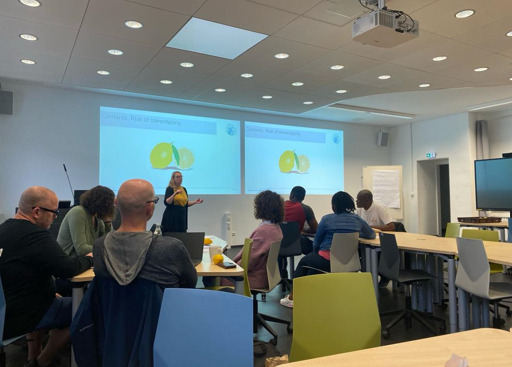
After some opening remarks from the conference organizer and UNESCO chair Prof. Arto Kallioniemi, we had a small introduction about GERIF and ANGEL networks. The main focus during the first part of the event was on networking and we had various different activities in which participants could introduce themselves, their research and try to reimagine education. This was a great learning opportunity for everyone involved since we were a very diverse group with educators, scholars and students coming from all over the world including countries such as Japan, Finland, Germany, India, Malaysia and Namibia.  

After the networking part, we had lunch at the University before heading out to a Helsinki walking tour with a small twist. Instead of visiting different tourist locations, the walking tour included places related to themes such as human rights, decoloniality or the climate crisis. For example, we visited the urban garden “Galleria Kasvihuone” at the Faculty of Educational Sciences and ended the tour at the Global Centre in Helsinki. There, we were able to take a peek behind the curtain and learn how global education NGOs in Finland operate. After a very interesting presentation, we were divided into groups and joined workshops organized by Amnesty International Finnish Section, Peace Union of Finland and Taksvärkki, Operation a Day’s Work. The workshops tackled issues such as sex education, peace education, and drama education. 

After the event, we exchanged contact information with everyone in the hope for continuous collaboration. We are grateful to all the speakers, participants who made both the conference and the pre-conference a success. We look forward to continuing this important dialogue in the future.

Authors: Andreas Rogler, Vihtori Kylänpää, Tuija Kasa, Selja Koponen, and Riikka Suhonen


Peace education and interfaith dialogue – building understanding together

Peace education and interfaith dialogue – building understanding together

The Finnish Social Pedagogical Society organized the annual social pedagogy conference on March 14th-15th in Espoo. The conference was co-organized with the Peace Education Institute and other cooperators, including three Universities of Applied Sciences (Laurea, Haaga-Helia, Metropolia). The authors (Selja Koponen and Heidi Rautionmaa) participated in the conference as workshop organizers, in-service teacher trainers as well as PhD researchers. In the following blog text, we reflect our insights from the conference; how peace education was portrayed and how does interfaith dialogue contribute to peace building.

Peace pedagogy, peace education or education for peace?

The theme of the conference was Peace Pedagogy in a World of Conflicts. Peace pedagogy was framed by the organizers as “education that seeks to foster the capacity for peaceful coexistence, the ability and willingness to resolve conflicts without violence, and a commitment to working together to build a better world”. These definitions of peace pedagogy are consistent with the concept of peace education or education for peace that has traditionally been a part of global education even though the definitions of peace education are not always unambiguous (e.g., Basman-Mor, 2021; UNESCO, 2005). Respect for life, human rights and democracy are indispensable to peace education, but other themes are also stressed, such as conflict resolution skills, well-being, compassion, trust, justice, and cooperation (Mishra et al., 2020; UNESCO, 2017). Additionally, peace education can be described as the underlying impetus in teacher’s or educator’s work which means continuous professional growth and learning (Gursel-Bilging & Flinders, 2020). Peace education could therefore be described also as a holistic and contextual pedagogy, both a process and a goal (UNESCO, 2017; Dutta et al., 2016).

Fostering peace in an unjust world

The keynote speaker of the conference was Dr. Sara Clarke-Habibi, who specializes in peacebuilding through education. She began her insightful speech, based on her long experience as a practitioner, researcher, and curriculum developer, by addressing the current challenges educators have. There is an ongoing struggle with rising xenophobia and conservatism, for example, that pose a threat to human rights, democracy, and peace. Peace builders are truly needed in every section of society.

Photo: Dr. Clarke-Habibi

Dr. Clarke-Habibi emphasized that peace pedagogies are always plural; the context and the people you are working and interacting with have a significant role when choosing appropriate educational approaches and methods. The objectives should not only be knowledge-related, for educators must combine, contextualize, and adapt pedagogies that are trauma-sensitive, culturally sensitive, multiperspective, self-reflexive and/or action-oriented, for instance. She stated that emotional and psychological sides of peace education should always be taken into consideration, as well as inner peace. For her, inner peace is a complex phenomenon, which has a temporal, relational, intra-, and inter-relational, as well as ethical dimension.

For us, a particularly poignant thought was the idea of inner peace as “a mature understanding”. According to Dr. Clarke-Habibi a mature understanding relates to universal ethics and is grounded on equality and equity. She argued that concepts such as positive and negative peace are important sociological concepts, but they are not enough. She highlighted the meaning of love and care, which create and maintain hope in an unjust world. These themes align with care ethics in which human relationality and co-dependency are acknowledged.

Interfaith dialogue as a peace pedagogy

The conference demonstrated to us, how education for peace is still overlooked in Finnish context. Even though the keynote speech as well as the panel discussion were focused on peace and peace pedagogies, the scientific presentations covered the theme of the conference only subtly. One reason might be the historical baggage peace education has as a part of the process known as “Finlandization” where peace education was considered as a part of Soviet Union’s attempts to affect Finland’s policies (Savolainen, 2011). What also became evident to us during the conference was that the different worldviews, religious, secular, or political, were not discussed nor considered as a part of education for peace.  

This caught us by surprise because a previous survey shows how teachers perceive religious diversity and different worldviews as challenging issues in teaching and education (KUPERA, 2021). In addition, the Finnish Ministry of Education and Culture published a study (OKM 2024:3) showing that subject teachers consider constructive interaction with other people to be a key objective of democracy education in lower secondary schools. The study suggests that an open and conversational classroom atmosphere is conducive to democracy education, but that building openness is challenged by the diversity of opinions and divergent views of pupils from different backgrounds (e.g., cultural, ethnic, religious, etc.). We, however, consider everyday interfaith dialogue essential to education for peace.

With interfaith dialogue educators can address the challenging and difficult issues that religions and secular worldviews and their interactions may raise in mundane situations in classrooms. Constructive encounters that promote understanding and cooperation can play a pivotal role in preventing and resolving conflicts, achieving equality, and promoting democracy. The key issue is how to engage in constructive and sustainable interfaith and intercultural dialogue to promote well-being for all.

A hands-on workshop

As a part of the conference program, we organized an interfaith dialogue workshop in which participants got to know a Hindu temple in Leppävaara. This workshop was also a part of our upcoming in-service teacher training called Everyday Interfaith Dialogue in School, which starts on September 2024 and is funded by Finnish National Agency for Education. As in-service teacher trainers, we have already organized courses focusing on diversity skills and peace education in the University of Helsinki (Centre for Educational Assessment, CEA). With Heidi being an interfaith dialogue specialist with almost 30 years of experience, as well as a grass root peace activist, the natural next step was to organize a training focusing on interfaith dialogue as education for peace.

The workshop explored how to engage in dialogue with surrounding faith communities. This kind of cooperation will reduce prejudices and open new possibilities for peace education. At the temple which is dedicated to Shirdi Sai Baba (1838 – 1918), one of the best known and most respected gurus of Hinduism, we met law student Hitesh Bhaskar, upper secondary school student Purvi Bhaskhar, Saipriya Bhaskar and Marko Näätänen, a Hindu expert from Faith Without Borders. Hitesh, Purvi and Saipiriya told us about Hinduism, how it affects their daily lives and what kind of prejudices they have encountered in Finland. The dialogue between our hosts and participants was generative and we got to enjoy their delightful hospitality.

Photo: An altar dedicated to Shirdi Sai Baba. A Hindu temple in Leppävaara, Espoo

Even though religions and different worldviews play their part in conflicts, they can be a resource to reconciliation and peace (Neufeldt, 2011). Through mundane interfaith dialogue, respect and understanding can be fostered and cultivated. It is seen that people attending sustainable interfaith dialogue experience communicative, instrumental, relational, personal, and transformative learning. One field trip can serve as an initial step towards the process for deeper learning, but it is a crucial step that is sometimes the needed boost.

Concluding remarks

During her talk, Dr. Clarke-Habibi suggested that education for peace should be considered as an art. She continued by saying that, for example, co-creation, listening to others, and ceding control are some of the key components of peace pedagogies. To address and tackle the vicious global problems of today, we need the art of understanding. This entails curiosity and compassion toward the “other” and deeper understanding of humanity – and interfaith dialogue skills so that different world views, religious and secular, can be discussed constructively to cultivate peaceful coexistence and build a better world for all.    

Selja Koponen & Heidi Rautionmaa

Selja Koponen is a doctoral researcher in educational sciences from the University of Helsinki. Her research focuses on democratic education and social sustainability. She is also a subject teacher in religious education.

Heidi Rautionmaa is a vocational teacher and a doctoral researcher from the University of Helsinki. Heidi provides training on inter-worldview issues mainly for teachers, people of religious communities and youth.

References:

Basman-Mor, Nurit (2021). Saving Peace Education: The Case of Israel. Higher Education Studies; Vol. 11, No. 1; 2021. p. 18-27.

Dutta, U. & Andzenge, A. & Walkling, K. (2016). The Everyday Peace Project: An Innovative Approach to Peace Pedagogy. Journal of Peace Education. 13. 1-26.

Gursel-Bilgin, G., & Flinders, D. (2020). Anatomy of a Peace Educator: Her Work and Workplace. Australian Journal of Teacher Education, 45(10).

KUPERA (2021). Kulttuuri-, katsomus- ja kielitietoinen perusopetus: KUPERA-tutkimus- ja arviointiraportti.

Mishra, L., Gupta, T. & Shree, A. (2020). Guiding Principles and Practices of Peace Education Followed in Secondary Schools of Mizoram. International Journal of Evaluation and Research in Education (IJERE) Vol. 9, No. 4, December 2020, pp. 1096-1101.

Neufeldt, R. C. (2011). Interfaith Dialogue: Assessing Theories of Change. Peace and Change, 36(3), 344–372.

OKM (2024:3). Yläkoulun opettajat ja demokratiakasvatus: Käsitykset, resurssit ja toteuttamismahdollisuudet.

Savolainen, K. (2011). Kasvatus maailmanrauhan välineenä: tapaustutkimus UNESCO:n 1974 hyväksymästä suosituksesta. Psykologia 46 1 (4): 30-34.

UNESCO (2005). Peace Education: Framework for Teacher Education.

UNESCO (2017). A Long Walk of Peace. Towards a Culture of Prevention.


Embracing Education Beyond National Borders: The Collaborative Journey of SIFTED

In the ever-changing world of education, collaboration transcends geographical barriers, cultural differences, and institutional boundaries, unifying educators with a common goal of enhancing teaching and learning globally.

At the forefront of this collaborative endeavour lies the Sino-Finnish Teacher Education and In-Service Teacher Training (SIFTED) project group, from the School of Applied Educational Science and Teacher Education, and the School of Educational Sciences and Psychology, at the University of Eastern Finland (UEF). The project group is part of a pilot network of internationalisation fuelled by the collective efforts of passionate educators from the Global Innovation Network for Teaching and Learning (GINTL).

Since 2022, the SIFTED project group has been at the vanguard of fostering collaboration between Finland and China, two nations renowned for their commitment to educational excellence. With the generous financial support of Finland’s Ministry of Education and Culture, SIFTED is embarking on a transformative journey, opening the door to innovative partnerships and groundbreaking initiatives in teacher education for UEF.

One of the cornerstone achievements of the SIFTED project group is the establishment of a strategic partnership with Capital Normal University, Beijing, China. Through the signing of a memorandum of understanding (MoU), SIFTED and Capital Normal University have laid the foundation for the co-development of a joint master’s degree program in Education, starting from mobility of courses, students, and faculty. This visionary initiative brings together Finnish pedagogical expertise and Chinese educational insights, offering students, teaching staff, and researchers from both countries a unique opportunity to engage with diverse perspectives and approaches to teaching and learning.

Furthermore, SIFTED has played a pivotal role in shaping the future of Sino-Finnish joint degree provision by actively contributing to the development of Quality Assurance Guidelines for Sino-Finnish Joint Degree Provision, in collaboration with esteemed colleagues from the Sino-Finnish Education Research Centre, Faculty of Management and Business, Tampere University. The Guidelines serves as a compass for ensuring the delivery of high-quality education that adheres to rigorous standards of excellence, thereby fostering mutual trust, quality culture, and confidence in joint degree programmes between Finland and China, for the SIFTED project, UEF, and beyond.

In addition to institutional collaborations, the SIFTED project group has also embarked on a scholarly exploration of the implementation of Finnish educational approaches by Chinese educators. Through meticulous research and analysis, they have sought to uncover the underlying principles and practices that underpin the successful adaptation and integration of Finnish pedagogy within the Chinese context. By sharing their findings through a research article, SIFTED aims to facilitate cross-cultural understanding and promote meaningful dialogue between educators from diverse cultural backgrounds.

Besides, with a vision to foster inclusive education practices, the project group has also embarked on a journey to empower Chinese educators through online courses. These courses serve as a bridge between two rich educational traditions, intertwining the innovative approaches of Finnish pedagogy with the unique needs and context of Chinese classrooms. Through this cross-cultural exchange, educators in China gain invaluable insights and tools to create inclusive learning environments that support learners’ diversity and nurture every student’s potential.

SIFTED’s collaborative efforts have an impact that goes beyond academia and has broader societal and cultural implications. By fostering cross-cultural exchanges and mutual learning experiences, SIFTED contributes to the cultivation of a global community of educators who are equipped with the knowledge, skills, and cultural competency to navigate the complexities of our interconnected world. Through their actions, they not only enrich students’ educational experiences but also promote intercultural understanding, cooperation, and mutual learning.

In addition, the SIFTED-led collaborative initiatives have the potential to catalyse wider societal transformation and sustainable development. By fostering closer ties between Finland and China in the field of education encouraged by the Joint Action Plan between China and Finland on Promoting the Future-oriented New-type Cooperative Partnership 2019-2023, SIFTED is a catalyst for building bridges between nations, encouraging diplomacy, reciprocity, and cultural exchange between Finland and China.

As we look forward, the journey of SIFTED proves the transformative power of collaboration in teacher education. SIFTED remains committed to shaping a more inclusive, equitable, and interconnected future of teacher education, by forging new potential partnerships, pioneering innovative initiatives, and promoting cross-cultural understanding.

Suhao Peng
Project researcher
School of Applied Educational Science and Teacher Education, University of Eastern Finland

Useful links:

Note: The author declares that ChatGPT was used to improve readability and language.

Reposted with permission from the author. Click here to view the original post: Embracing Education Beyond National Borders: The Collaborative Journey of SIFTED – Puheenvuoroja (uef.fi)


(TRANS)CULTURAL LEARNING IN TEACHER EDUCATION.

Reflections on BaTEG Summer School 2023: (Trans)cultural learning in teacher education

The BaTEG (Bamberg Teacher Education for a Global World) summer school for (trans)cultural education was held this year at the Otto Friedrich University of Bamberg in September. The main objectives have been to give educators-to-be the perspectives, objectives and tools they need to work in culturally and linguistically diverse classrooms. From the very beginning the program has had presentations from experts from Germany and abroad, with topics varying from research project introductions to workshops.

The international BaTEG summer school aims to delve into critical inquiries concerning the essence of culture and its influence on societies, individuals, and education systems as well as the development of intercultural, multicultural and transcultural skills. Another objective is in facilitating the development of a global mindset, and providing prospective future teachers the knowledge and strategies that prepare them for culturally diverse settings. In our era of globalization and cultural diversity while simultaneously witnessing the rise of global conflicts and the potential for cultural clashes, the pressing demand for cultural self-awareness and intercultural competence cannot be overstated. It is imperative for educators to possess a nuanced understanding of culture—their own and that of others—and to be aware of its profound impact on individuals. Educators are charged with the responsibility to adeptly navigate culturally diverse classrooms, manage cultural conflicts, facilitate intercultural communication, and prepare students for a globalized society – not an easy feat by any means. But equipping educators with the skills they need for these contexts is crucial.

The summer school was organized on-site in Bamberg and included participants from: Germany, France, Poland, Finland, and Australia, and among the Bamberg University lecturers there were attendees also from Ukraine and the UK. The summer school could be seen as a co-operative project since most international presenters had some students from their institutions participating. The authors of this blog post were invited to participate by Professor Mervi Kaukko (Tampere University, Faculty of Education and Culture) who was presenting her work on refugee education and asked us to join her for this enriching week. 

The weeklong summer school was intensive and rewarding in various ways. The day-to-day program often involved lectures and workshops throughout the day, with presenters approaching the topic of the summer school from various different angles. Particularly enriching was the balance often struck between theory and practice within a single lecture or workshop. It’s one thing to study and engage in lectures about intercultural education, and quite another to put these concepts into practice in a real classroom setting. Theoretical frameworks such as global education, intercultural, and transcultural education can initially seem quite abstract, especially for new teacher-students who are just beginning to delve into these topics. It was heartening to see the emphasis placed on the practical application of the theories discussed as well. 

Engaging presentations, like the one from Dr. Anete Scheunplfeg (University of Bamberg), encouraged students to reflect on global concepts using popular media like Star Wars and Doctor Who as catalysts for opening discussions. These shows were utilized as tools for teaching media literacy, and for exploring the concepts of cultural identity and representation, showing us how pop-culture can be utilized for language learning. Dr Dorota Owczarek’s (Adam Mickiewicz University Poznań) presentation on popular American icons encourages us all to reflect on how these icons are adapted also outside the United States, as we explored the elements that contribute to their influence around the world. Meanwhile, Dr. Marta Janachowska-Budych’s (Adam Mickiewicz University Poznań) infectious energy challenged us to brainstorm ways in which intercultural and transcultural themes could be deconstructed in the classroom utilizing literary texts. The hands-on approach and insightful discussions provided an engaging learning environment.

Workshops and activities, such as the staircase activity run by Martina Zier (BaTEG Coordinator. University of Bamberg), helped students reflect on power and inequity, and their uneven distribution in the world. Each student was assigned a new “identity” that detailed age, gender, ethnicity, family background, spoken languages and socio-economic standing. Students could ascend the staircase step-by-step if the statement read by Martina coincided with their assigned identity (For example, “I have never faced discrimination due to my name or ethnicity”). The authors of this blog experienced vastly different outcomes in this simulation, with Meri remaining on the lowest stair of the staircase and Maija ascending straight to the top. Maija reflected: “I actually began to feel almost embarrassed when I kept on climbing in almost every new description and most of the others stayed put at least every once in a while”, while Meri reflected:  “Although the exercise was not new to me, the stark realization of being unable to advance even to the first step, while others moved up steadily, was a poignant reminder of the various unseen and unacknowledged advantages and disadvantages that permeate our society.” Overall, this activity was a good way to open up discussion and increase awareness of students’ positions within society.

Some of the activities pushed us out of our comfort zone, such as when Dr Matthew Thomas (Deakin University, Australia) made us loud and silly in his workshop. By doing so he helped us to create a sense of community and break the tension so that we could be more open to share our ideas and experiences. This is pivotal in transcultural learning because the learning environment should be one based on safety and anti-discrimination. By introducing a cultural immersion project in the South Pacific we also explored the development of a global mindset in teachers, and how it can be fostered and developed in pre-service teachers. An important component of the project was its focus on critical self-reflection, which is an essential aspect of any teacher’s process of developing cultural awareness and culturally responsive teaching practices.  

Plenty of time was allocated also to social gatherings and cultural activities that students and presenters alike would embark on together. The space made for these informal moments of reflection and learning were immensely meaningful, as the conversations could reach new depths when more time could be used to ask further questions from the presenters and experts who were in attendance. The cultural activities, including walks around the beautiful city of Bamberg, visiting the Altenburg castle up in the nearby mountain, beer tastings and more were, put simply, very fun. They were also a great way to build new relationships with other academics and students who have an interest in topics relating to global or intercultural education.

Based on our experiences in Bamberg, we would encourage others, especially teacher students, to participate in Bamberg summer school for transcultural education. The experience provides opportunities for both personal and professional development, connecting peers from other countries and is a great way to get perspectives outside of your everyday environment and home university. Thank you especially to Martina Zier and to everyone who made the summer school possible, as well as the kind invitation to participate from Tampere university this year. We hope additional students, researchers and colleagues from Finland will be encouraged to participate in the following years as well.

To find out more about the BaTeg summer school, please check out their website:

https://www.uni-bamberg.de/en/zlb/k-r/bateg/summer-school/2023/

Maija Yli-Jokipii

Maija Yli-Jokipii is Ph.D. researcher currently finishing her dissertation about Plurilingual learnes´s mother tongue tuition in Finland. In addition, she is a forager and a gardener, crafter, knitter and sower interested in the skills and competences of our foremothers. She does not drink beer 😉 

Meri Häärä

Meri Häärä is a doctoral researcher at Tampere university as well as a board member and blog-coordinator of the GERIF research network. Her current work is centered around intercultural teaching and learning, and she is currently investigating connections between implicit beliefs of malleability and the development of intercultural competences in teacher education. 


Imagining global education and learning for a just, peaceful, and sustainable world

Takeaways from the 2023 ANGEL Conference

Authors: Ms. Richardine Poulton-Busler, Ms. Frieda Shingenge, and Dr. Marika Matengu

Reposted with permission from the GINTL project. Click here to view the original post:

Imagining global education and learning for a just, peaceful, and sustainable world

The Academic Network of Global Education and Learning (ANGEL) Conference in Paris, France, which took place from 19 to 20 June 2023, is a venue for creating ties among researchers and scholars in the field of global education. Dr. Marika Matengu, Ms. Richardine Poulton-Busler, and Ms. Frieda Shingenge participated in the conference – at which Ms. Shingenge and Hanna Posti-Ahokas (GINTL) also had the opportunity to present a paper – with the help of GINTL funding. This article is a summary of their experiences and lessons learned from the conference.

In recent years, the world has experienced a series of challenges and crises which have called all of us to rethink our ways of being, thinking, doing, and relating to one another and the nature around us. This repositioning is especially important for the educators that prepare the citizens of tomorrow. As Massimiliano Tarozzi from the University of Bologna stated in the opening session of the ANGEL conference, “Education plays an important role in imagining this future.”

Imagining something that is not yet known requires collaboration, networking, and the sharing of experiences and research with one another. The Academic Network of Global Education and Learning (ANGEL) is a network of researchers, policymakers and civil-society organisations that explores global education and learning in pursuit of a more just, peaceful, and sustainable world. It holds that work need not be done alone and offers a long-standing network of experienced (and less-experienced) scholars with whom it is easy to explore educational challenges locally and globally in a mind-provoking manner.

Such was our experience of the conference – ‘us’ being Ms. Richardine Poulton-Busler (University of Namibia), Ms. Frieda Shingenge (University of Namibia), and Dr. Marika Matengu (University of Oulu), all attendees at the ANGEL Conference in Paris on the 19th and 20th of June 2023. Our participation in the conference was made possible by the GINTL collaboration that is in place between the University of Oulu and the University of Namibia. In this article, we share some of our key highlights and lessons learned from the presentations by and dialogues with our ANGEL colleagues.

Education transformation and the democratisation of research

One of the conference’s mind-provoking presentations was given by Professor Arjun Appadurai (New York University), who argued that it is time to democratise research. He defined research as “a systematic pursuit of the not yet known and emphasized the importance of research in setting the development agenda and the goals for actions. Yet, he claimed, research has been largely conducted by a small intellectual elite – and while this tiny intellectual elite share what they know and learn, how well can the research body – if excluding a rich local participation – really provide understanding of “not yet known”? How can it direct ongoing development towards a more just and sustainable world? Professor Apparurai argued that it is time to put our efforts – including funding – into democratising research: If we do not democratise research by ensuring sufficient funding, enhancing research capacity, training researchers locally, and setting research agendas and developing research goals locally, all efforts that aim for development are useless. According to Apparurai, research is a political act which calls attention to citizenship education. The concept of research-based citizenship means increasing the capacity to do research, developing research habits and competence. This does not necessarily mean increasing the number of PhDs, but rather expanding the capacities of people (youth, high school students, etc.) and creating avenues to do research. This endeavour might also require us to redefine what research itself really is.

Another theme that emerged from various presentations and continued in the discussions was the transformation of education from its current state. Sobhi Tawil from UNESCO askedwhether, if being educated means living unsustainably, that does not mean that we are doing something wrong with our education systems. In the same vein, Miriam Vilela from Earth Charter International argued that there has been a vacuum in our education systems for fostering an ethic of care, respect and responsibility towards one another and the larger living world. The consequence of this vacuum is a set of ethically and ecologically illiterate citizens – which means careless and indifferent citizens, demonstrated in society by increasing corruption, intolerance, environmental degradation, social and environmental injustices, negligence, and citizens and with short-term and fragmented views of both society and reality. Vilela highlighted how ethics have an influence in what we do to nurture, care for, and respect one another. Therefore, the question of how to bring values and principles in education needs attention.Sobhi Tawil suggested that transforming education means going beyond reforms and moving towards education systems that are truly different from today’s. In imagining transformed education, we must be careful with short-term thinking that is focused on crises and emergencies, rather than allowing time for critical reflection and reimagining(s). Finally, Tawil pointed out that educational transformation also requires wider political and societal changes; not the other way around. He asked one very important question for reflection: What are some of the root causes of cultural/social exclusion? We need education to transform and that, Tawil argues, means looking back and looking ahead. This was also the view of Arjen Wals, a Professor of Transformative Learning for Socio-Ecological Sustainability at Wageningen University who also holds the UNESCO Chair of Social Learning and Sustainable Development. He highlighted that we cannot do business as usual to achieve transitional education; we need to go beyond our cognitive realm. 

Takeaway message

One statement by Miriam Vilela is one that we can all reflect on as educators and academics: “The more educated I am, the more freedom and knowledge I have, and the more responsibility I have for building the common good. As we are all learning to know, learning to do, learning to be, and learning to live together, we are learning to transform ourselves and society.” In accordance with our learnings from the ANGEL Conference, some things that we can all do to develop our capacity to transform is to:

  1. Consider the consequences of decisions and actions;
  2. Examine what informs our decisions;
  3. Question our assumptions and challenge our values and mental modes;
  4. Be concerned with the common good or goal, and not with competition; and
  5. Expand our views and sense of care and responsibility.

The ANGEL Conference was a transformational experience that provoked us to see the intertwined nature of education, development, and sustainability in new ways. We would highly recommend this network for any academic who is interested in global education to join ANGEL. We would especially like to highlight the Early Career Researchers Network that was established during the conference this year for researchers who completed their PhD not more than 6 years ago.


An educational approach to integrating diverse cultures in Finland and South Korea

Introduction

When I first came to Finland from Korea, I experienced a type of identity loss I had never felt before. I almost felt that, with my black eyes and hair, it was no longer possible for people to see me as a primary school teacher, a doctoral researcher, and a double master’s in education, but simply and automatically as “Other” or “Foreign”. I felt, as a natural reaction to seeing foreigners in any place, people pretended not to be interested, frequently glanced at, or stared at me steadily. In most cases, young children showed more honest and curious facial expressions.

This recognition of differences means that we, all humans, are basically on the same line to learn from each other, regardless of ethnicity, religion, and cultural background. Previously in my time as a primary school teacher in Korea, teaching in a culturally homogenous classroom, I had thought that multicultural education was not something relevant to my work or life. However, through my own experiences of “otherness,” I have become increasingly curious about multicultural education in both Finland and Korea. Both countries have a history of long trends of cultural homogeneity, and both tend to score highly in global educational rankings. So how does multicultural education operate in these two countries, how do practices and policies attempt to support students, and is there something both countries can learn from each other?

Multicultural / Intercultural education in Finland and Korea

In Finland, current trends in educational research have been moving away from ‘multiculturalism’ towards ‘interculturalism’ or ‘interculturality’, which emphasizes mutual understanding and communication (Layne & Dervin, 2016). Rather than merely learning about others’ cultures, it is the interactions between groups within schools and society that plays a crucial role. Throughout Northern European history, the term ‘multicultural’ often referred to non-Western and non-white people as an opposite group, immigrantness (Hummelstedt et al., 2021). However, the changes became the starter to establish the principle of security and non-discrimination in educational policies. For example, S2 students (students with Finnish as a second language)  are entitled to a language policy that supports Finnish language development alongside the development of an individual’s mother-tongue language (THL, 2023). The preparatory education for immigrant students with little knowledge of Finnish for one year aims to develop their language skills and provide other skills for studying (City of Helsinki, n.d.; Rask, 2023). In terms of supporting mother tongue, the local government offers education in one’s mother tongue with native speakers or professional teachers in educating foreigners (The Finnish National Agency for Education, EDUFI, 2017).

Despite this Finland still struggles with educational inequities. One might be surprised to hear it, as Finland’s education systems are often highly praised, but academic achievement gaps between Finnish students and first or second-generation immigrants in Finland remain wide particularly compared to other OECD countries (OECD, 2019). Moreover, immigrant students in lower-secondary schools are three to five times more likely to experience bullying (Hummelstedt et al. 2021). According to the Finnish Institute for Health and Welfare (THL)’s biennial School Health Survey, gender and income differences, along with color and place of origin, are also associated with school violence. Specifically, the report noted that a lack of societal resources has a direct impact on experiences of racism, for instance, bullying can persist for years if teachers lack the time and resources to address issues and talk with students.

Korea is not without its struggles regarding multicultural education as well, despite its high global rankings in education (OECD, 2019). In Korea, we emphasize the term ‘Multicultural sensitivity education’ which refers to the attitude of openness to heterogeneous cultures and their owners (Lim et al, 2019). This is rooted in the national survey instrument, the Korean Multicultural Acceptability Inventory (KMAI) which covers adults (n=5000) and adolescents (n=5000) and consists of three sub-categories; diversity, relationships and generality, in the 3-Year Cycle Project since 2012 (MOGEF, 2012). The report plays a crucial role in multicultural education as well as integration plans and policies. However, having high multicultural acceptability scores in the survey does not meet the educational field in practice, which is much more nuanced in nature. Primarily the generality of ‘we must understand and respect cultures different from ours’ is emphasized, and this does not lead to individual willingness or action on how to create relationships, build discourse among different groups, or how to execute successful multicultural teaching practices (Seo & Yang, 2021).

Korea has maintained a single ethnic history for a relatively long time. Although we did not have independent and sequential exchanges with the world, ‘globalization’ in Korea is now a part of everyday life. 10 years ago, about 1.1% of all primary school students were multicultural students. Now, primary school students accounted for 4.2%, an increase of 1.5 times from 5 years ago and 3.3 times from 9 years ago. Yet, the use rate of daycare centers (or kindergartens) for infants and toddlers, which is a major predictor of academic achievement at school, is about 10% lower than the average for multicultural children, and low-income families often do not use institutions. In addition, the dropout rate of multicultural students is very high and often caused by difficulties in establishing relationships with friends or teachers and adapting to school life (KESS, 2022). The violence exposure rate of students with multicultural families was 8.2% as of 2018, which is relatively high considering the average rate among all students in the same year was 1.3%.

Conclusion

With the development of technology, transportation, and communication methods including smartphones and social media, multicultural classrooms, and societies are becoming more and more common. Therefore, if education does not provide a foundation for balanced perspectives of diverse cultures in school children and execute education in a way that strives for equity, current intercultural conflicts could even intensify as children grow up. Not addressing inequity and issues of social justice within education systems around the world will only serve to further perpetuate societal inequities and stratification. So, is there something Korea and Finland could learn from one another, and is it useful to compare these two education contexts?

As a teacher, I believe we need to support the healthy growth of students with immigrant backgrounds by supporting the learning of the local language and mother tongue languages, as this serves as a compass that helps students to find their own identity, as a person with a foreign background living in Finland. In this respect, I believe Korean education systems could learn something from Finland’s language policies. In turn, state-led standardized multicultural surveys can be useful in presenting a big picture of policymaking, and perhaps Finland in turn could find these useful. As an educational resource, students and teachers should be prepared to discuss topics such as social justice, non-discrimination action, social justice issues, and internationalization according to the level of students.

Ultimately, more research is needed on educational approaches to integrating diverse cultures into educational systems and societies and should be geared toward supporting teachers and creating more equitable outcomes for students. Both Finland and Korea have this to work on, but perhaps being open to exploring educational models from other countries can potentially provide useful insight and help illuminate these issues, not only in Finland and Korea but globally as well.

*Eunji Kim is a doctoral researcher currently at Tampere University researching teachers’ perspectives and roles in the effective implementation of mathematical communication in primary mathematics classroom with a comparative approach between Finland and Korea. She has posted several articles related to education issues on ERICK(Education Research & Innovation Center of Korea). ERICK (https://21erick.org/) is a non-profitable organization to enhance the quality of  Korean education (NPO). The articles were written in Korean, but it would be good to explore and understand common phenomena between Finland and Korea.

#Linkedin: https://www.linkedin.com/in/eunji-kim-197b27248/

References

City of Helsinki. (n.d.). Oman äidinkielen opetus. Helsingin kaupunki. Retrieved February 14, 2023, from https://www.hel.fi/helsinki/fi/kasvatus-ja-koulutus/perusopetus/mita-opiskellaan/kielten/oman-aidinkielen-opetus/oman-aidinkielen-opetus

Hummelstedt, I. P., Holm, G. I., Sahlström, F. J., & Zilliacus, H. A.-C. (2021). Diversity as the new normal and persistent constructions of the immigrant other – Discourses on multicultural education among teacher educators. Teaching and Teacher Education108, 1–10.

KESS. (2022). Brief statistics on Korean education-Multicultural Students. Korean Education Statistics Service. Retrieved February 13, 2023, from https://kess.kedi.re.kr

Layne, H., & Dervin, F. (2016). Problematizing Finland’s pursuit of intercultural (kindergarten) teacher education. Multicultural Education Review8(2), 118–134.

Lim, S. I., Oh, Y. H., Cho, I. J., Lee, Y. M., & Lee, E. K. (2019). A Study on the Limits and Diversification of Multicultural Sensitivity Education in Elementary·Secondary School. The Journal of Cultural Exchange. Korean Association of International Culture Exchange.

Ministry of Gender Equality & Family (MOGEF, 2012). A study on multicultural acceptability in Korea.

OECD. (2019). Where all students can succeed (Pisa 2018 Results (Volume II).). OECD Publishing Paris. https://doi.org/10.1787/b5fd1b8f-en

Rask, S. (2023, February 14). Shadia Raskin Kolumni: Koulukeskustelussa UNOHTUU Keskiluokkaisten vanhempien vaikutus. Yle Uutiset. Retrieved February 14, 2023, from https://yle.fi/a/74-20016613

Seo, J., & Yang, S. (2021). A Study on the Relationship of Multicultural Acceptability and Multicultural Education: Centered on Relationship. The Journal of Humanities and Social sciences 21. Asia Culture Academy of Incorporated Association.

The Finnish National Agency for Education (EDUFI, 2017). Perusopetukseen valmistava opetus. Opetushallitus 4:2017.

THL. (2023, January 20). Integration and inclusion. Finnish Institute for Health and Welfare. Retrieved February 14, 2023, from https://thl.fi/en/web/migration-and-cultural-diversity/integration-and-inclusion


Conceptual reflections in Finnish Educational Research Association of Education 2021

The 2021 FERA Conference was organized remotely 25-26.11.2021. GERIF organized a thematic group with a topic “Global education in advancing local and global wellbeing / Globaalikasvatus paikallisen ja maailmanlaajuisen hyvinvoinnin edistäjänä”. The group provided an opportunity for researchers in global education to present current research. Two sessions included six papers, all presented in English.

The first of the sessions was more concerned on perspectives about teachers’ role in advancing global education and the second more concerned on students’ perspectives. All six provided a different answer to the challenges of educating interdisciplinary subjects in different school systems and levels, from teacher education to vocational education. Possibly because of the challenges in different sites, many papers discussed what are the relevant concepts and perspectives through which we should approach global education. Interestingly, almost all of the papers included a reference to postcolonial theory, which therefore seems to be a common interest among global education researchers in Finland now.

This year we’ll see in Oulu! It seems, that the debate about the relevant concepts will continue there!

Please look through abstracts. They can all be accessed here  Abstracts.pdf


HANDBOOK OF GLOBAL EDUCATION AND LEARNING

Have you checked out the new Bloomsbury handbook of global education and learning?

Among the many interesting contributions we would particularly like to mention the following chapters co-authored by some of the GERIF coordinators:

“Global education research in Finland”  Elina Lehtomäki (University of Oulu, Finland) and Antti Rajala (University of Helsinki, Finland)

and

“How do Higher Education Students Negotiate Global Responsibility in Education?” by Hanna Posti-Ahokas, Josephine Moate (University of Jyväskylä, Finland) and Elina Lehtomäki (University of Oulu, Finland)

Make sure the library at your institution has a copy!

More information: https://www.bloomsbury.com/uk/the-bloomsbury-handbook-of-global-education-and-learning-9781350108738/