The CCC-CATAPULT project: Reflections on co-production

Working with young people in research is rewarding, even though there are some major challenges one has to encounter if they want to commit to co-productive research domains. In this blog I want to share my and my colleagues experiences, ideas and perspectives on co-production in research. I was working on an international CCC-CATAPULT project (Challenging the Climate Crisis: Children’s Agency to Tackle Policy Underpinned by Learning for Transformation) for almost three years. CCC-Catapult involves researchers and young people from across Tampere (Finland), Bristol (UK), Galway (Ireland) and Genoa (Italy). The focus of the project was to develop knowledge on how young people, their teachers and other educators in four different city regions in Europe are situating and making sense of their lives in relation to the climate crisis. To do this, we examined multiple dimensions, such as social norms, worldviews, emotions and values.

CCC-CATAPULT had a mixed-methods approach, including interviews with teachers and other educators of young people, following a survey, focus groups, and narrative activities combining deep mapping and storyboarding techniques with young people. Because the main goal was to look at climate change through the ‘eyes and ears’ of young people, we wanted to work with young people directly through the whole process with a co-productive research approach. In practice, this led us to recruit a group of young people, called YAPs (Youth Action Partnerships), in each location. YAPs worked with us throughout the process to ensure that the research adequately captured young people’s voices and stories. They came together with researchers to contribute to the development, investigation, implementation, and dissemination of the CCC-CATAPULT. 

Leading the co-production group of young people

One of my main tasks was to lead the YAP group in Tampere. We recruited young people aged 15 to 18 years old from the city of Tampere upper secondary and vocational schools, as well as from hobbies such as scouts or religious communities. Primarily we had ten young people however, due to life circumstances, many of them left the study. Some participants moved to another city after their studies while some had many hobbies and interests, and therefore did not have time for the research for two and a half years. We also got two new participants during the study, and last year we spent with an active group of four young people.

YAP members met once a month at least. Young people got to comment on the survey, focus group and interview questions. In Tampere they obtained funding for, organised, and ran an academic panel event for young people and their educators. They analysed and told their perspectives on researchers’ first stage analysis of the data.

Since leading the YAP group alone raised many questions, we gathered to reflect our experiences with other YAP group leaders. Based on our reflections and YAP’s interviews, we wrote an article on co-production. (Portus et al. 2024). I will share some insights based on the article and our reflections. We will also have a tool for researchers to design a co-production research with young people in our web page ccc-catapult.org this spring.

The principles of co-production

Hickley et al. (2018) conducted five principles for co-production: sharing of power, including all perspectives and skills, respecting and valuing the knowledge of all those working together on the research, reciprocity and building and maintaining relationships. As we worked with young people, we saw it was necessary to add three more principles to that list: empowerment and capacity building, extended opportunities (for skills development, engagement and international connections), and ongoing reflection and evaluation. I will discuss a few of the principles in more detail next, especially from the point of view of what we learned.

Sharing of power

It is essential to be aware of the power dynamics, especially in co-production. Working with young people brings another nuance to the power dynamics: Young people are most likely to view the adult researchers as automatically being in a role of authority. And because of their experiences at school, they might be used to giving answers, which the teacher wants to hear. In research, however, it is important to hear all sorts of opinions, so the power dynamics must be addressed.

At the beginning of the project, I tried to level myself with young people. I tried not to use power on them. I tried to make space for them to decide what we should do. Quickly I learned that young people are not ready for the power I gave them. We had to train taking power with little projects, and that is why we decided with the Tampere group to arrange a panel discussion, and the Bristol group decided to design a climate cafe.

At the end of the project, our YAP members told us they would have wanted more strict frameworks for the project. They also struggled with the unknown process of research. They were expecting that we would have had a clear research design, which would be known already at the beginning. We should have told them that research is messy, and we will be wiser at the end of the project. Consequently, YAP’s also said that they learned a lot of research, as things aren’t always carried out like schools’ science books tell them.

Including all perspectives and skills 

When the group is conscious of the power dynamics, and there are structures which support the ones who has less power, all perspectives and opinions are more likely to be shared in the process.

We considered inclusion already in the recruitment process, when we tried to reach young people from different backgrounds. Sadly, in Finland we reached only upper secondary school female students to the group. Maybe it was too high of an aim for people from different backgrounds. Many young people are busy with their everyday life, maybe only few have the courage to participate in a research process, and maybe this kind of a research interests only people who are already familiar with such a topic.

If I could have a chance to redesign the recruitment process, I would take time to visit schools and different kind of places where young people are spending their free time, to make my face familiar to them. I would also contact more teachers, since almost all our YAP members were encouraged by their teacher to participate. I think it would be really important to take time for the recruit process, to visit schools. 

Respecting and valuing the knowledge of all those working together on the research

In co-production, it is important to make space for team members to share their knowledge. In our survey, YAP members commented on our unfinished survey and noted that it did not include questions on environmental emotions, which were then added to the survey. YAP members saw how their knowledge was relevant to the survey, and they felt that their voice was heard. However, this needs to be kept in focus, as it became clear in the final interviews that YAP members did not always know where their comments ended up and whether they influenced the research. As a researcher, it was easy to ask them for their views and forget to tell them about the implications because the processes are so complex and long term.

Reciprocity

I believe that paying a payment would increase the chances of many people participating in a research project. Many young people are involved in hobbies in their free time and work hard on schoolwork, and some of them even have jobs. Participation in the study often required them to make efforts similar to school work, and it seemed unfair to assume that they would do it purely out of the goodness of their hearts. Of course, participating in the study gave young people many opportunities that they were very happy with. For example, the international meetings between young people were popular and in high demand. In addition, the study gave them opportunities to contribute to society, and one young person said that she understood that she benefited from the study because it benefited society. They learned from doing the research and said that they were proud of the knowledge that the research produced and what they learned from being involved. We gave them job certificates and recommendations for job search, which we hope will be useful. Many of the young people involved became even more interested in climate change during the project and applied for related studies.

Building and maintaining relationships 

Building trust is key to enabling members to share and reflect on the knowledge, assumptions, preconceptions, and prejudices they bring to the research project. And perhaps more importantly, trust and relationships are often the main reason why members want to be involved. For young people in particular, peer relationships are really important and it was a pleasure to see how they enjoyed each other’s company. However, for such a development, certain activities had to be planned, such as trust exercises and nice get-togethers: picnics and films. If I were to start a co-production now, I would put a lot of effort into team building at the beginning and only include the study a little later. We built in space for personal reflection, either during meetings or by encouraging both YAP members and researchers to write a reflective diary. Reflection stops are an important part of checking if everybody is feeling alright in the team and with their role.

From doubt to flourishing

The reason why co-productive research methods were developed was discussion and research from developmental psychology. Young people were not seen anymore as incapable. The view of children and young people as immature and in need of adult guidance was questioned (Matthews 1984). This led to a perspective in which young people were studied with rather than on young people (Ansell, 2005; Wyn, Lantz & Harris, 2012). At the beginning of the project, I wanted to see young people as capable, but I approached them as if they already knew a lot. Soon I was faced with kind of disappointment. Are they not capable of doing research? I questioned the co-production: could it even be done with young people if they needed so much guidance? But as the project progressed, I learned that the young people just needed practice in research skills. They were learning and developing and were much more capable at the end of the project than at the beginning. The project had given them many lessons and several of them told us how they felt they had grown as a person because of their involvement. This is already such a significant result of the research that I want to continue to get involved in projects using co-production.

References

Portus, P., Williams, S. J., Mansikka-aho, A., Reilly, K., Aarnio-Linnanvuori, E., de Vito, L., Dillon, B., Fahy, F., Gnecco, I., Palla, A., Sposito, S. & McEwen, L. (2024). Reflections on co-productive research in a youth-focused climate education project. Geographical Research.

Hickey, G., Brearley, S., Coldham, T., Denegri, S., Green, G., Staniszewska, S., Tembo, D., Torok, K., & Turner, K. (2018). Guidance on co-producing a research project. INVOLVE. https://www.invo.org.uk/wp-content/uploads/2019/04/Copro_Guidance_Feb19.pdf 

Ansell, N. (2005). Children, Youth and Development. London: Routledge. 

Matthews, M. H. (1984). Environmental cognition of young children: images of journey to school and home area. Transactions of the Institute of British Geographers, 89-105. 

Wyn, J., Lantz, S., & Harris, A. (2012). Beyond the ‘Transitions’ Metaphor: Family Relations and Young People in Late Modernity. Journal of Sociology, 48(1), 3–22.


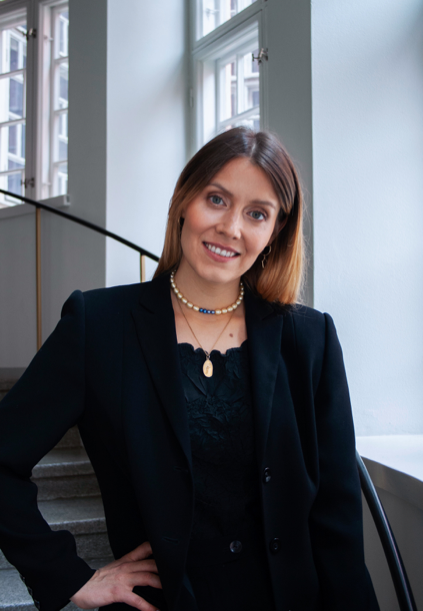
Anette Mansikka-aho is a doctoral researcher at the University of Tampere who studies young people’s experiences of climate change in her dissertation. She is interested in environmental emotions, communication and education. Her main area of research is the pedagogical relationships in the era of climate crisis.

Check out the CCC-Catapult project here: https://ccc-catapult.org/


Political emotions affect the future of democracy –  how should education respond?

Illustration: © Karin Eremia

What are political fear, anger, hope and compassion, and why should they be discussed in the context of education? In this blog post, I revisit my PhD study, in which I tackled these questions from the viewpoint of educating for a democratic way of life and touched upon movements that have been successful in mobilising young people politically in recent years, such as #BlackLivesMatter and #FridaysforFuture. My central argument is that political emotions play a significant role in the establishment of democratic culture and in the political mobilisation of young people, which is why they should be discussed in education.

About the study

My PhD study scrutinized a world-known philosopher Martha Nussbaum’s work on political emotions – a perspective that had not been comprehensively examined in the field of education. The study explored both the tensions and the possibilities involved in education for political emotions, especially with respect to constructing collective political aims and addressing various global social and political challenges.

The study combined educational sciences and political philosophy. The work comprised three interrelated studies that approached the relevance of Nussbaum’s work to education from different angles through various real-life examples. Through the studies, Nussbaum’s work was discussed in three frameworks of political education: global citizenship education, democratic citizenship education, and human rights education.

Why talk about political emotions now?

”Polarisation and global challenges in liberal democracies increase the need for research on political emotions.”

Political emotions such as fear, anger and compassion have been recently observed in connection with the war in Ukraine. What is more, in recent years, the political culture of liberal democracies has become increasingly polarized. At the same time, societies are faced with complex shared global challenges, including climate change or the Covid-19 pandemic, for which constructive solutions should be sought together. Perhaps partly for these reasons, academic research on the significance of emotions in political mobilisation has increased in recent decades. 

However, as I see it, emotions are not discussed in education or related research to a sufficient degree. This is strange, considering that education plays a significant role in establishing and supporting a democratic lifestyle.

What are political emotions?

“Political emotions are significant, as they tell us something about our values and can induce people and groups to act.”

In my research, I view emotions as cognitive judgements and as value judgements. That is to say, emotions are about something and they are always evaluative, meaning that the object of emotion is something that has some significance to the person experiencing the emotion (e.g. Nussbaum, 2001).  The cognitive element of emotions suggests that they are intertwined with the way we receive information about the world and with the way we communicate information to others.

What is ‘political’ about ‘political emotions’? I draw attention to the distinction between private and individual, on the one hand, and public and collective emotions, on the other (e.g. grief over a lost loved one as a private emotion vs. climate anxiety as a political emotion). I view political emotions as public, both in terms of their object and in terms of their expression. Furthermore, I wish to highlight that emotions are associated with political potential: that is, emotions can motivate the pursuit of social change and transformation, which can take a variety of forms, including voting, advocating for policy, activism, or sharing information about injustices on social media. Also, it should be noted that I understand the ‘political’ in political emotions in its broadest possible form, describing the public life and the public realm and not as restricted to, for instance, existing political institutions, party politics or voting. 

Findings/argument

”Emotions should be thoroughly understood in all their ambiguities and possibilities to make them useful to the culture of democracy.” 

My PhD study offered several findings, starting with the problematic consequences that negative political emotions (fear and anger) can have for the democratic decision-making and education policy. Furthermore, the political, in citizenship education, should be understood as a collective striving toward shared goals, supported by constructive political emotions, rather than as a conflictual relation between ‘us’ and ‘them’. The study also took the first steps in envisioning a ‘Nussbaumian pedagogy’, suggesting different ways in which political compassion and narrative imagination could be reflectively practised in classrooms when teaching and learning about human rights issues, laying down a sustainable foundation for global democratic citizenship.

I argued that a well-functioning democracy should establish and pursue at least some shared political goals, and that political emotions, such as hope, compassion and trust, engender the desire and motivation to commit to these shared goals. Thus, political emotions become pertinent also for education. Education has an essential role in learning to adopt democracy and in the dismantling of political and social challenges, such as racist discrimination. 

However, not all political emotions are necessarily constructive and beneficial to democracy; emotions need to be analysed and understood, and critically assessed in today’s polarised social and political environment, so that they can be utilised in educating people for a democratic way of life. Therefore, I urge that emotions, their different manifestations as well as potential benefits and harms, should be introduced both to public and school discourse.

As a whole, my PhD study offered new perspectives and ways to explore the relationship between politics, emotions and education. The present times have been considered by many as exceptionally dark, so I have strived to articulate much needed suggestions for education which are constructive and hopeful.

Iida Pyy

PhD, Postdoctoral Researcher at DEMOPOL project

Faculty of Educational Sciences

University of Helsinki

iida.pyy(at)helsinki.fi

Twitter: @iidapyy

Researcher profile: https://researchportal.helsinki.fi/en/persons/iida-pyy

ORCID: https://orcid.org/0000-0001-9138-166X

The PhD thesis Evolving Emotions: The relevance of Martha Nussbaum’s theory of political emotions in Education was presented for public discussion at the University of Helsinki, on the 27th of May, 2022. The thesis earned distinction, and its summary can be accessed here.

The PhD thesis was based on the following original publications that are available online:  

Pyy, I., Leiviskä, A., & Mansikka, J-E. (2020). Contesting the Politics of Negative Emotions in Educational Policymaking: A Ban on Asylum Seekers’ School Visits in Finland. Global Discourse, 10(2–3), 371–390. https://doi.org/10.1332/204378920X15802968112372

Leiviskä, A., & Pyy, I. (2020). The Unproductiveness of Political Conflict in Education: A Nussbaumian Alternative to Agonistic Citizenship Education. Journal of Philosophy of Education. 55, 577– 588. https://doi.org/10.1111/1467-9752.12512

Pyy, I. (2021). Developing political compassion through narrative imagination in human rights education. Human Rights Education Review, 4(3) 24–44. https://doi.org/10.7577/hrer.4482   

Who am I?

I am Iida Pyy, a Postdoctoral Researcher of the DEMOPOL project in the Faculty of Educational Sciences, University of Helsinki. Before my postgraduate studies, I studied at the University of Oulu and the University of Melbourne, Australia, with intercultural education as my major subject. Previously, I have worked as a bilingual class teacher and a special class teacher as well as at UNICEF Finland. In addition to research, I am involved in activities associated with antiracism and social responsibility. 


“I felt I had no other options but to do something” – the transformative moment in climate agency formation among Finnish youth

The climate movement of youth is one of the most visible phenomena of our time in civil society. Youth have claimed the public sphere in order to address the climate crisis and the urgency of actions needed. The action and resistance practised by youth has evoked public discussion concerning not only the climate crisis, but also the political agency and citizenship of youth in the era of crisis. My master’s thesis “We have a say, we must act, now – youth as climate active citizens” (Ahola 2021) examines youth climate action from the perspective of political agency. The study focuses on the formation process of agency, in addition to which the supportive and preventive factors of agency are explored. Drawing on qualitative interviews with 12 Finnish youth aged between 15 and 19, the study also contributes perspectives on global education and global citizenship.

The Maastricht global education declaration (2002) states: “global education is education that opens people’s eyes and minds to the realities of the world, and awakens them to bring about a world of greater justice, equity and human rights for all”. In the interview data, descriptions of eyes opening and awakening to the reality of the climate crisis and its social consequences were identifiable (cf. climate realization, Pihkala 2019). For most of the youth, the process of climate active agency formation took the first steps in late 2018 followed by the IPCC report and global school strikes. The interviewees discussed about a moment of awakening, where their way of seeing the world and being in the world was transformed for good. Something that they cared for – whether it was nature, their future, the wellbeing of distant others, etc. – was threatened.

Before that I felt I had been in the dark, no one really talked about climate change. Some tiny matters at school sometimes, but one couldn’t understand the real severity of it. The increasing news led me to find out more… I was reading some studies. I don’t remember how far I read the report, quite far, and then… It made me feel terrible. (Roosa, 18)

As Roosa mentions above, becoming climate active happened outside of formal educational settings. For the youth, e.g. school was seen as a place where growth for political engagement was predefined and restricted instead of creating space for youth-led action. The moment of awakening was a rather self-educative experience, as the youth would not only get to know about, but feel the meaning of being connected to the world and understand their place – role, responsibility and lifestyle – in it. Questions of guilt, justice and moral responsibility or obligation stemmed from the understanding of the climate crisis as a social threat causing suffering both close and distant. For the youth, realizing they had to and they could do something in order to mitigate the climate crisis opened up and extended their political agency, and changes in individual behaviour, together with joining climate active collectives, followed.

I see the climate realization of youth as a counteraction to social inertia (Brulle & Norgaard 2019), as socially constructed silence around the topic of climate crisis begins to crack. Youth among other members of the public were faced with the uncomfortable reality of the climate crisis, caused by the unsustainable way of living. The IPCC report, school strikes, media attention and public discussion created a moment of crack (see Holloway 2010) by shedding light on the status quo. A moment of crack forges a space for saying no to business-as-usual, and saying yes to bringing about change. Saying no and yes by dissenting from the business-as-usual views, together with unconventional practices, may create disturbance, conflict and rebellion – both at individual and collective level of thinking, feeling and doing. But saying no and yes is first and foremost an act of care and an antidote to indifference and apathy. That is why moments of crack are a window of opportunity for the growth towards active and caring global citizenship.

Paula Ahola

Ahola graduated from social sciences in May 2021 with major in social pedagogy. Her master´s thesis is linked to Pedagogy of Concrete Utopias -project.

References:

Ahola, Paula (2021) We have a say, we must act, now – youth as climate active citizens. Master´s thesis. University of Eastern Finland. Https://erepo.uef.fi/bitstream/handle/123456789/25125/urn_nbn_fi_uef-20210597.pdf?sequence=1&isAllowed=y.

Brulle, Robert J. & Kari Marie Norgaard (2019) Avoiding cultural trauma: climate change and social inertia. Environmental Politics. Https://www.tandfonline.com/doi/full/10.1080/09644016.2018.1562138.

Holloway, John (2010) Crack Capitalism. London: Pluto Press.

Pihkala, Panu (2019) Mieli maassa? Ympäristötunteet. Helsinki: Kirjapaja.

The Maastricht Global Education Declaration (2002) Https://rm.coe.int/168070e540.